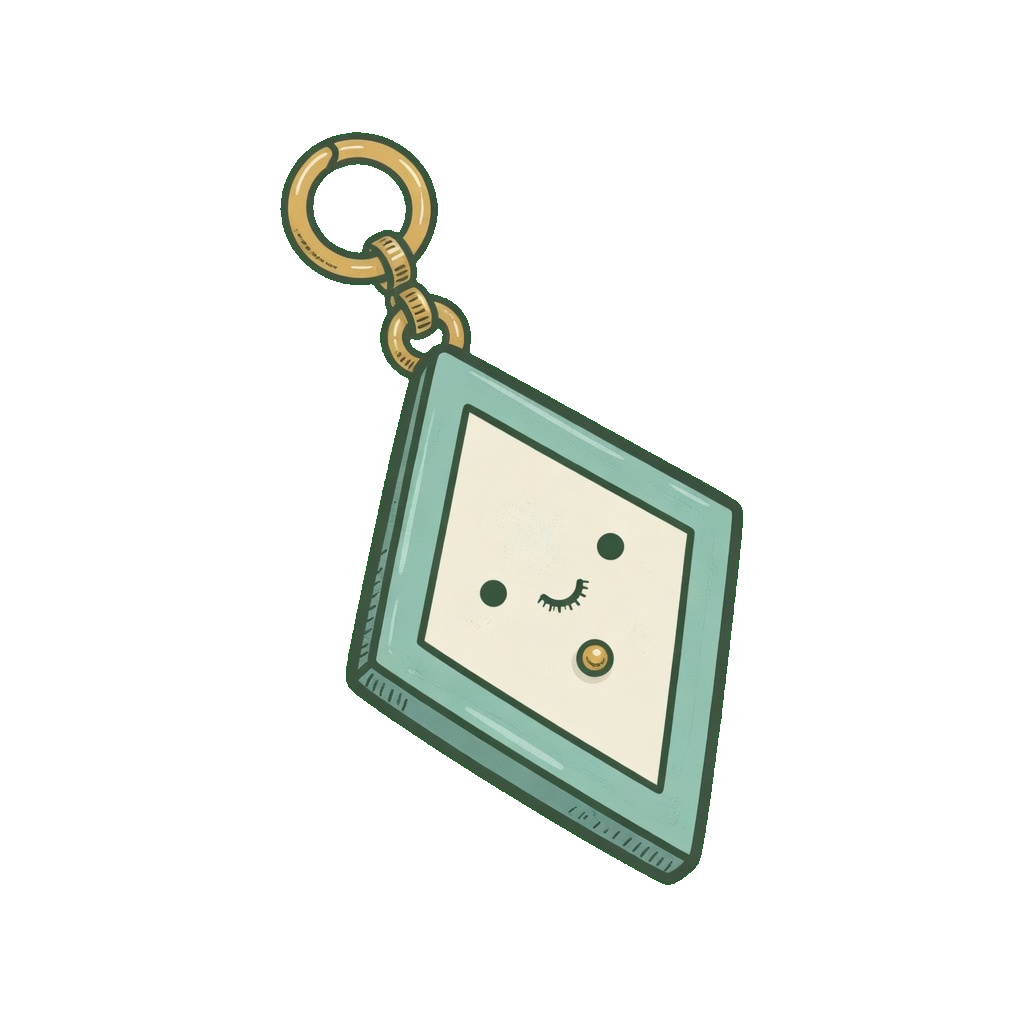
The join is the finding that connects one piece of a dangle to the next. Read a hang from the top: ring → plate → letter. The starter underneath still needs a closer. Jump ring and lobster clasp are two jobs, even when a tray of findings sells both.
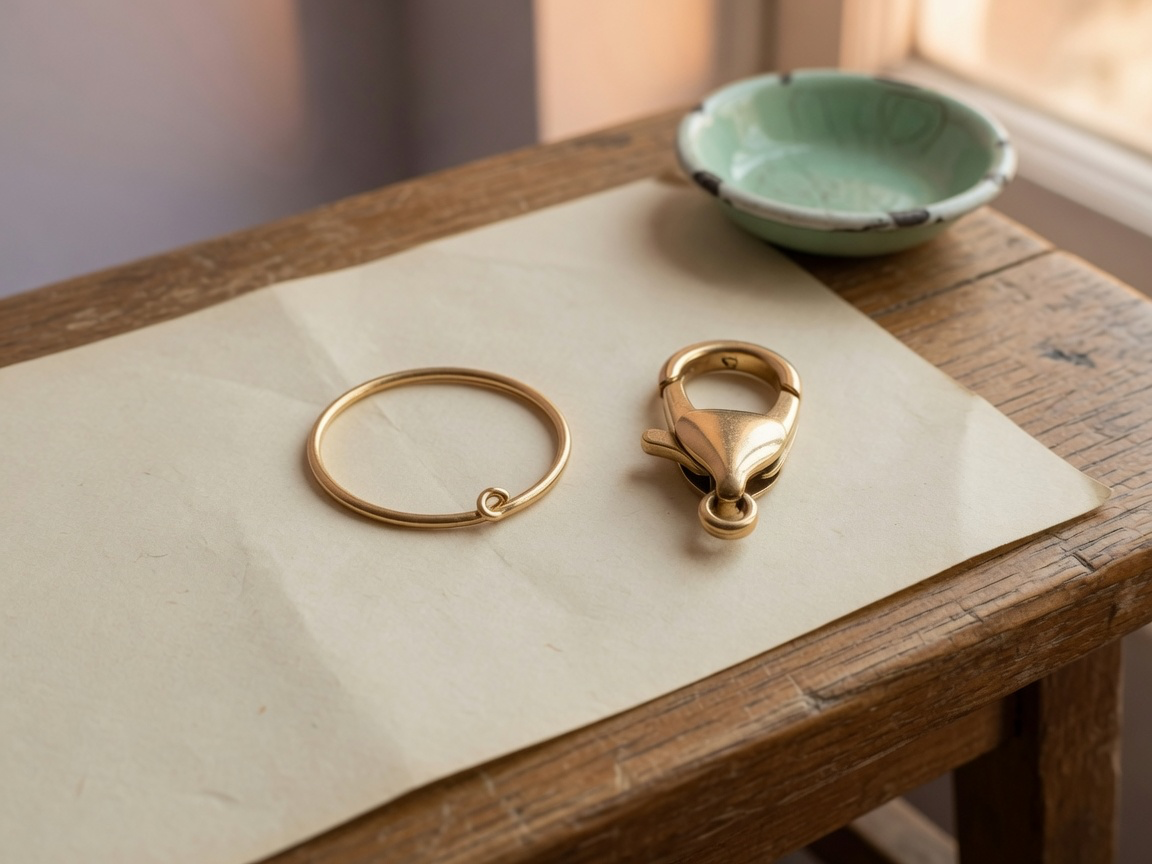
The ring opens the hang. The lobster closes the wrist.
Cited from the International Gem Society. Mail: contact page.
What each finding is
The IGS findings lesson treats rings as the simplest connector attachments. A jump ring has an opening along the ring. Twist it open, slide on a chain or a plate hole, close it. Solder it if you do not want it to pull apart; unsoldered rings can open under strain. A split ring is a double circle of wire, like a key ring, slower to change, harder to lose.
The IGS bracelet-and-necklace lesson treats clasps as fasteners that secure the piece. A lobster clasp (lobster claw) is named there as the strongest type of clasp, with a lot of metal in the pincer. A spring-ring is the lighter, cheaper closer; IGS notes the spring can stick. A hook-and-eye is simpler still, and that same lesson warns it is a poor match for bracelets because it can unhook in wear.
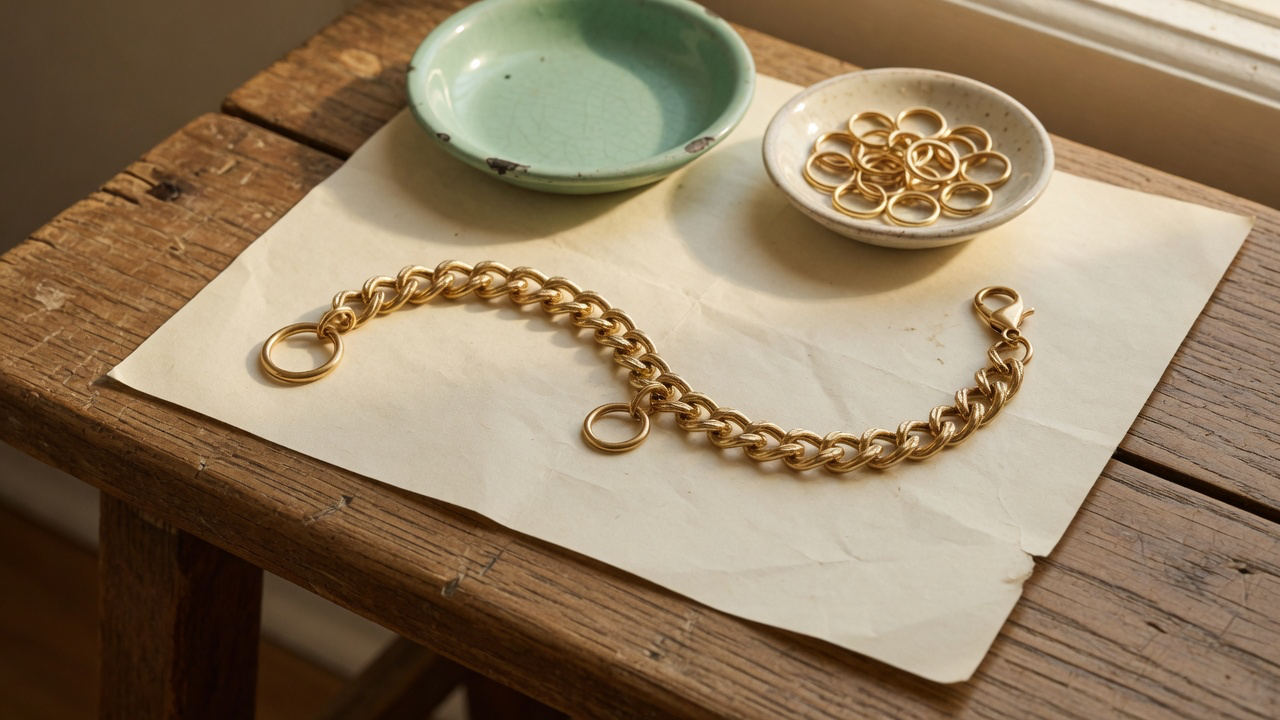
IGS also says a finished chain normally has a clasp at one end and a simple ring at the other that slips inside the clasp. That is the starter: lobster on one end, ring on the other, souvenir in between.
When each finding wins
| If you need… | Use | Why |
|---|---|---|
| A plate or letter to hang from a link | Jump ring | IGS names the jump ring as the connector through a hole. Twist it, close it, solder if the week is wet. |
| A hang that will not twist open in a pool | Split ring | Double coil. Slower to change. Harder to lose after chlorine and sunscreen. |
| The starter to stay on the wrist | Lobster clasp | IGS: strongest everyday closer. Lives at the end of the chain. |
| A letter you can unclip in a hotel sink | Lobster as join | Name a lobster if you want the letter to unclip. Name a jump ring if it should stay on the hang. |
Tip
Typical charm jump ring: 18 to 20 AWG (about 0.8 to 1.0 mm wire), inner diameter 4 to 6 mm. A large lozenge: 16 AWG, ID 6 to 8 mm. Twist sideways. Pulling the ends apart ruins the close.
lobster as a removable hang
Some wrists hang a letter from a lobster so the dangle can unclip without twisting a jump ring. IGS names the lobster as a clasp and the jump ring as the connector through a hole. If you want a letter you can take off after a park week on I-Drive, say lobster join in the note.
A spring-ring as the hang is the lighter closer. The dangle-starter kit stays on jump ring, lobster, and letter.
Warning
Hook-and-eye closers can unhook in wear. IGS says so, and a walking day on International Drive will prove it. Name a lobster for the starter. Name a jump ring or split ring for the hang.
What to write in a note
- Jump ring through a center-hole lozenge, the usual hang here.
- Split ring if you do not want the hang to open again.
- Lobster on the starter as the closer you already wear, or as a removable join. Say which.
Hang guide: Dangle, plate, and starter. Kit searches: Dangle kits.
Sources
- International Gem Society, Jewelry Attachments and Various Findings. gemsociety.org/lesson/jewelry-nomenclature-jewelry-attachments-various-findings
- International Gem Society, Necklace and Bracelet Terminology. gemsociety.org/lesson/necklace-and-bracelet-terminology